Mission
In times where protecting nature and providing equitable educational opportunities has become even more important, I have it my goal to help spread the lessons I have learned about protecting and preserving the environment and cultures within the Cascadia bioregion through multiple different modalities. Whether it be through art, travel, environmental/outdoor education, or research that idea of preservation and future dreaming is what guides me in my career choices. I aim to make a positive impact on all whom I teach in order to give our communities hope for the future.
more as educator
Educational Journey
Throughout this section of my website you will be able to see me engaging in reflective practice about my journey as a teacher. I’ve had many wonderful opportunities that I’d love to share and expand upon more in depth.

November 2025
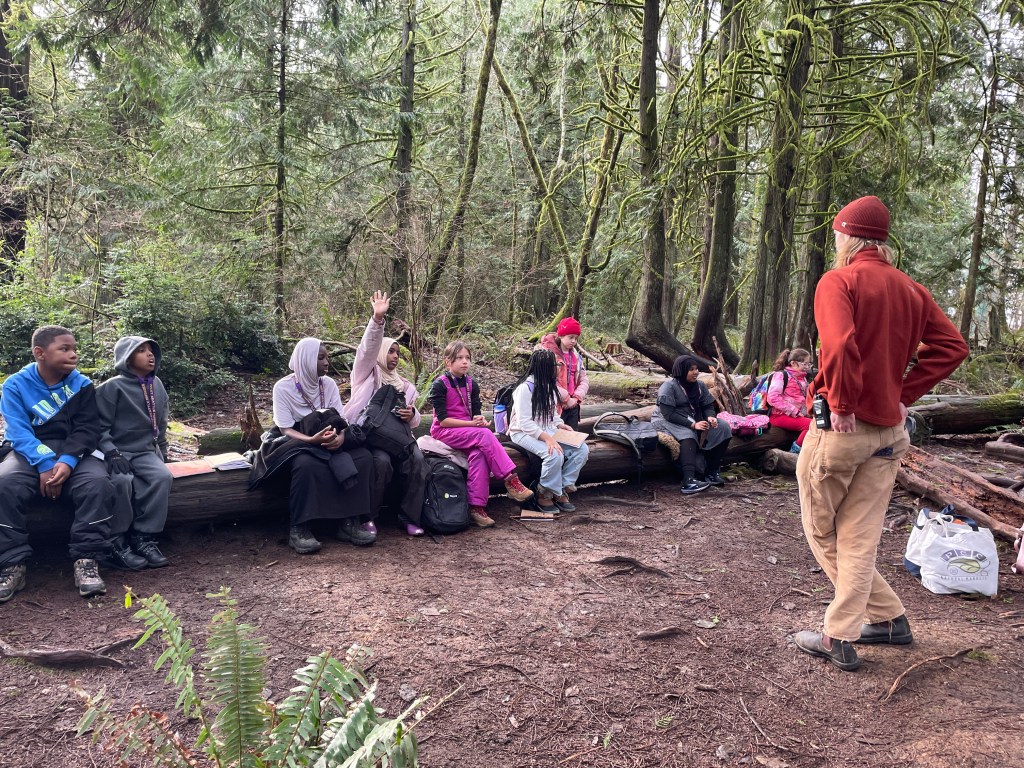
The image above was taken at Islandwood, where I am currently taking classes and working for my masters of education. Here at Islandwood there is a rich history of educators furthering their careers in environment and community development. I’ve had the opportunities to expand my repertoire of lessons here by deepening my connection to the communities in and around Islandwood and furthering my knowledge of the environment and culture within the central Salish Sea Region. This can be seen through the lesson portrayed above. It is a representation of me leading a lesson called baskets in which we have students learn how people have and still do create deep connections with plants to create culturally important tools and art. This lesson is important to me because it shows the students how deep connections with the land can lead to even deeper understandings of your community and the broader world. During my time here and engaging as an educational practitioner I hope to continue in engaging more lessons like this and learning better ways to understand how to be a culturally responsive teacher.
January 13, 2026
A lesson that I recently created and ran was centered around biodiversity’s connection to resilience. I did this through a few steps, first I had the students teach each other the names of the plants, their traditional uses, and how they each grow. Afterwards I told them a view/lens I often use, that is pretty anthropogenic, to understand ways nature works. That being, nature as a city. I talk to them about how nutrients are being traded within the ecosystem and the different cycles that are at play whether it be decomposition, weather, and geology. I then ask them what systems they see within their own community, and then to construct buildings out of materials they find on the forest floor. I like to structure lessons like this to make them think about what makes home important to them, reflect on what aspects of their environment do they appreciate. When they do this it often leads to them dreaming of the futures they want to live in, which is a powerful tool for keeping young students motivated when the world can be frightening at times.
August 8, 2023
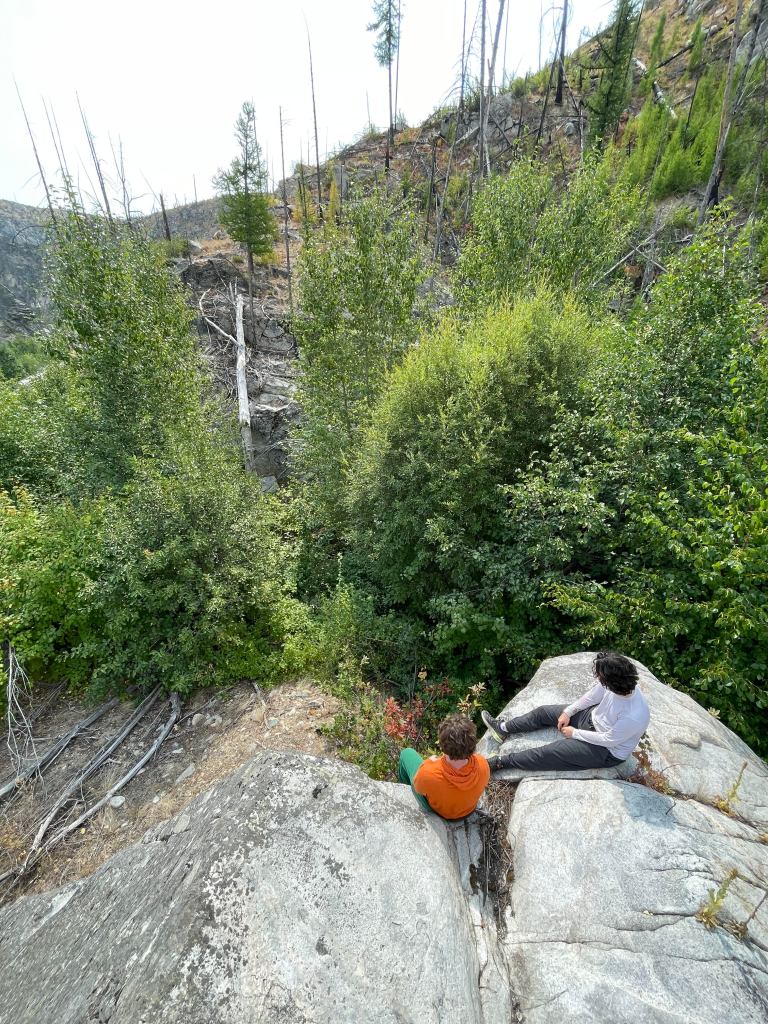
Here pictured are two of the first people I formally taught when becoming engrained into the world of education. They were high school students that signed up to participate in the youth corps program I helped pilot in 2023. It was my first teaching experience outside of helping run climbing club for college students at WWU. They taught me a lot about what it meant to be a good educator through creating engaging practices and just getting to know them at a genuine level, which was a bit easier since it was just them and my co-lead most of the time. I look back to the earlier photos I have shared and think about the different ranges of students I’ve had from fourth graders to other graduate students and find myself enjoying being an educator for all. I think there are lessons I want to delve into that are multi-dimensional and important for intergenerational learning opportunities, I’m excited to see what opportunities present themselves to me in the future.
Jan 22, 2026
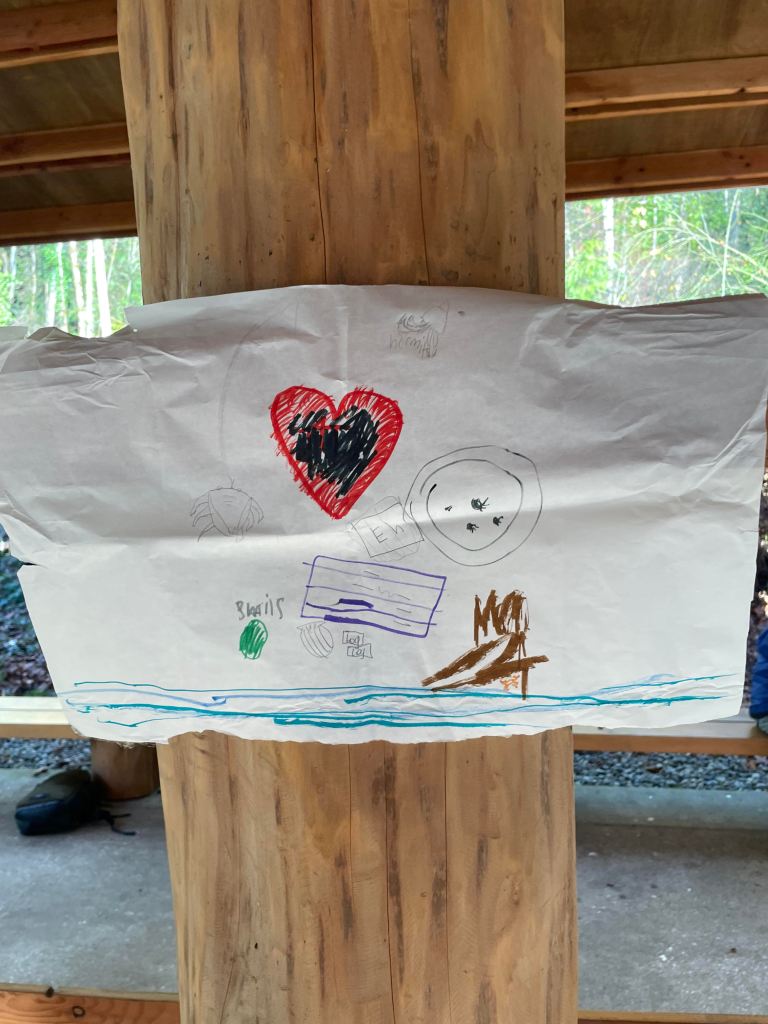
This is a small example of some of the student work that I have seen produced at Islandwood. It is a map of the harbor that they drew with markers and colored pencils. It is significant to see because it is of their observations of interactions between the human world (heart graffiti) and the pilings with crabs and barnacles. I have been trying to focus on interconnectedness within our ecosystems and this is one of the many ways I have students think about that concept.
Feb 5, 2026
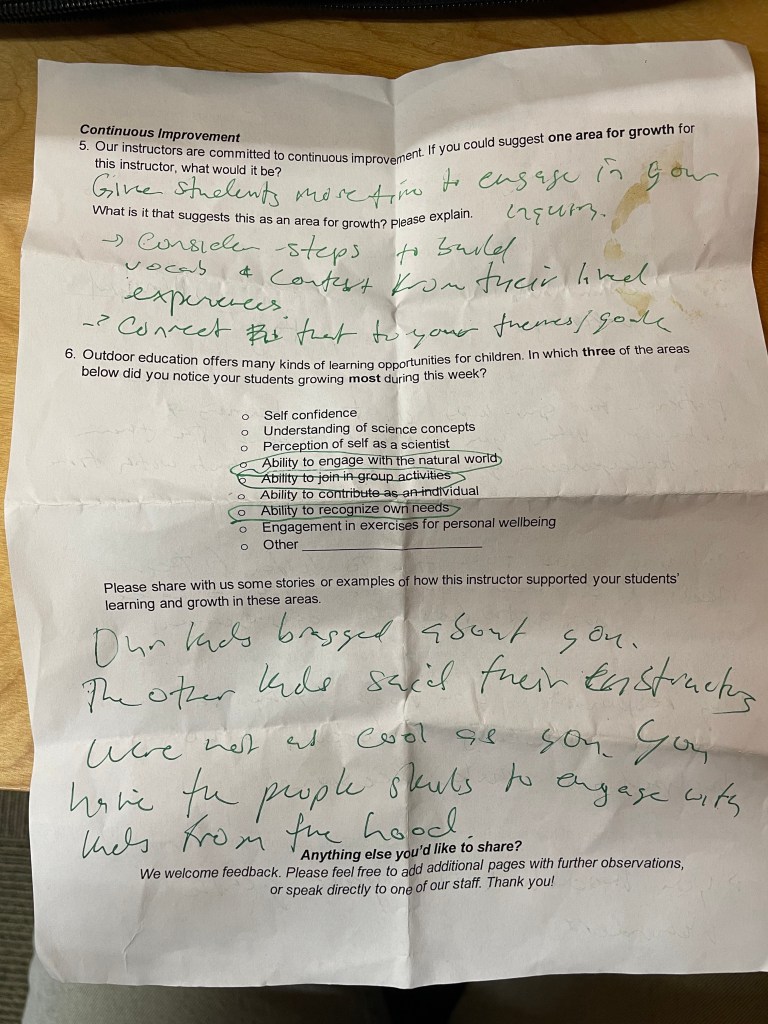
This week after a wonderful time teaching a group of students from Lakeridge Elementary, I received feedback from some of the chaperones in my group. This is a wonderful time for me to engage in reflective practice and see what aspects of being an educator I could improve upon. The notes above tell me that I need to block out more time for questions during my instruction, which I will be implementing promptly in my next teaching week.
 Rory Peterson